
Joint Replacement Myths vs Facts: What Every Patient Should Know
Joint replacement surgery is one of the safest and most successful orthopedic procedures available today. Despite this, many people delay treatment because of myths surrounding surgery, recovery, age, and mobility. Understanding the facts helps patients make informed decisions and seek treatment at the right time.
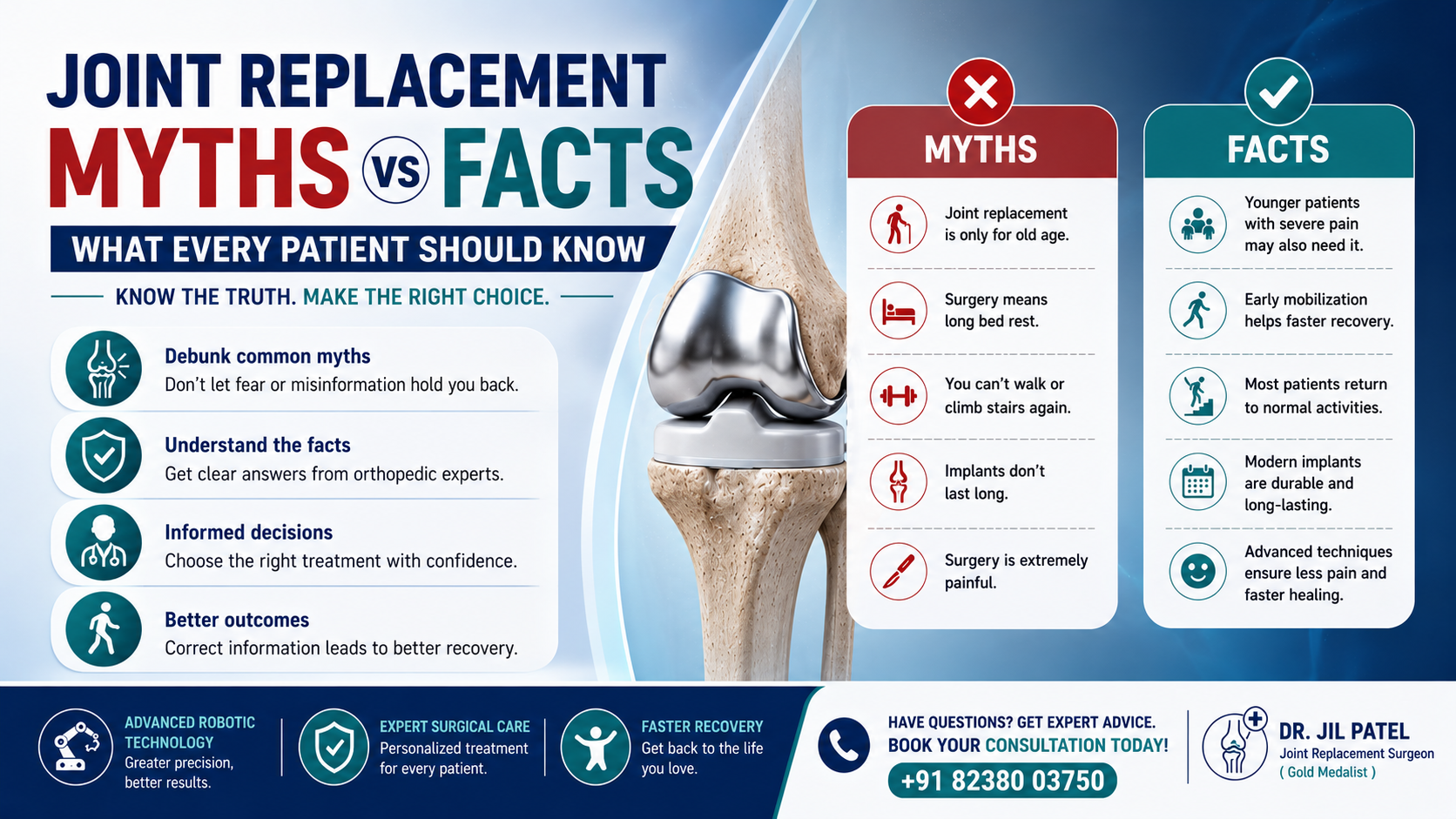
Joint pain can slowly take away your independence. Walking becomes difficult, climbing stairs feels painful, and even getting out of a chair becomes a challenge. Yet many patients continue living with severe pain because they believe myths they have heard from friends, relatives, or the internet.
Modern orthopedic surgery has advanced significantly over the years. With improved surgical techniques, better implants, advanced rehabilitation, and robotic-assisted technology, joint replacement surgery has become safer and more precise than ever before.
If you are considering Joint Replacement Surgery in Ahmedabad, separating myths from facts can help you make the right decision for your health.
Myth 1: Joint Replacement Surgery Should Be Avoided Until the Pain Becomes Unbearable
Fact
One of the biggest misconceptions is that surgery should only be considered when a patient can no longer walk.
In reality, waiting too long may lead to:
- Increased joint deformity
- Muscle weakness
- Reduced mobility
- Poorer overall fitness
- More difficult rehabilitation
Seeking medical advice early allows your orthopedic surgeon to recommend the most appropriate treatment before the condition worsens.
Myth 2: Joint Replacement Surgery is Only for Elderly People
Fact
Although knee arthritis is more common in older adults, age alone does not determine whether someone is a suitable candidate.
Some younger individuals may require surgery due to:
- Severe arthritis
- Sports injuries
- Joint deformities
- Previous fractures
- Rheumatoid arthritis
Similarly, many healthy older adults benefit greatly from joint replacement surgery and enjoy improved mobility afterward.
Myth 3: Robotic Surgery Means the Robot Performs the Operation
Fact
This is one of the most common myths about robotic knee replacement.
The robot never performs the surgery independently.
The orthopedic surgeon remains in complete control throughout the procedure. Robotic technology simply assists the surgeon by providing:
- Detailed surgical planning
- Real-time guidance
- Enhanced precision
- Better implant positioning
The expertise of the surgeon remains the most important factor.
Myth 4: Recovery Takes More Than a Year
Fact
Recovery has improved significantly with modern surgical techniques.
Most patients:
- Begin walking within a day after surgery
- Start physiotherapy immediately
- Return to many daily activities within a few weeks
- Continue improving over several months
Recovery varies from person to person and depends on physiotherapy, overall health, nutrition, and commitment to rehabilitation.
Myth 5: Artificial Joints Don’t Last Long
Fact
Today’s joint replacement implants are designed for long-term performance.
With proper care, many implants function successfully for 15–20 years or even longer, depending on the patient’s activity level, body weight, and overall health.
Regular follow-up appointments also help maintain long-term joint health.
Myth 6: Surgery is Extremely Painful
Fact
Modern anesthesia, pain management techniques, and minimally invasive approaches have significantly reduced discomfort associated with joint replacement surgery.
Pain after surgery is temporary and gradually decreases as healing progresses.
Most patients report that the pain caused by arthritis before surgery was much worse than the discomfort experienced during recovery.
Myth 7: Physiotherapy Isn’t Necessary
Fact
Physiotherapy is essential for successful recovery.
It helps:
- Improve flexibility
- Increase muscle strength
- Restore knee movement
- Improve walking ability
- Reduce stiffness
Patients who actively participate in rehabilitation often achieve better outcomes than those who skip exercises.
Myth 8: You Cannot Walk Normally After Joint Replacement
Fact
The primary goal of joint replacement surgery is to restore comfortable movement.
After successful rehabilitation, many patients return to activities such as:
- Walking
- Climbing stairs
- Driving
- Travelling
- Gardening
- Light exercise
While high-impact sports may not be recommended, most patients enjoy a significantly improved quality of life.
Myth 9: Every Patient Needs Robotic Knee Replacement
Fact
Robotic technology is an excellent advancement, but it may not be necessary for every patient.
The choice between robotic and traditional knee replacement depends on:
- Age
- Bone quality
- Joint deformity
- Overall health
- Medical history
- Individual expectations
A detailed consultation helps determine the most suitable approach.
Myth 10: Joint Replacement Should Be Feared
Fact
Fear often comes from misinformation.
Joint replacement is one of the most successful orthopedic procedures worldwide. Thousands of patients regain mobility, independence, and confidence after surgery every year.
Choosing an experienced orthopedic surgeon, following rehabilitation guidelines, and maintaining a healthy lifestyle contribute significantly to long-term success.
How to Prepare for Joint Replacement Surgery
If surgery is recommended, preparation can improve your recovery.
Helpful steps include:
- Maintain a healthy weight
- Stay physically active
- Control diabetes or blood pressure
- Stop smoking if applicable
- Strengthen leg muscles through physiotherapy
- Discuss medications with your doctor
- Prepare your home for safe movement after surgery
Proper preparation reduces complications and supports a smoother recovery.
When Should You Consult an Orthopedic Surgeon?
Consult a specialist if you experience:
- Persistent knee pain
- Swelling
- Difficulty walking
- Knee stiffness
- Limited daily activities
- Pain that affects sleep
- No improvement despite medication or physiotherapy
Early evaluation helps determine the right treatment before joint damage becomes more severe.
Frequently Asked Questions
Is joint replacement surgery safe?
Yes. Joint replacement surgery is considered one of the safest and most successful orthopedic procedures when performed by an experienced surgeon.
Is robotic knee replacement better than traditional surgery?
Both procedures are effective. The best option depends on your medical condition and your orthopedic surgeon’s recommendation.
Can I climb stairs after knee replacement?
Yes. Most patients regain the ability to climb stairs after completing rehabilitation.
Will I need physiotherapy?
Yes. Physiotherapy is essential for improving strength, flexibility, and mobility after surgery.
Can younger patients undergo joint replacement?
Yes. Age is not the only deciding factor. The severity of joint damage and the patient’s overall health are more important considerations.
Conclusion
Joint replacement surgery has transformed the lives of millions of people by helping them overcome chronic pain and regain their mobility. Unfortunately, myths and misconceptions continue to prevent many patients from seeking timely treatment.
Understanding the facts allows you to make informed decisions about your health. Whether you are considering robotic knee replacement or traditional joint replacement, consulting an experienced orthopedic specialist is the best way to determine the most suitable treatment.
If you are looking for Joint Replacement Surgery in Ahmedabad, early consultation can help relieve pain, restore movement, and improve your overall quality of life.
Book Your Consultation
Don’t let myths keep you from living an active life. Schedule a consultation with Dr. Jil Patel to receive expert guidance on joint replacement surgery, robotic knee replacement, and personalized orthopedic care in Ahmedabad.