
Recovering after knee replacement surgery requires a combination of physiotherapy, proper nutrition, regular exercise, medication adherence, and a positive mindset. Most patients begin walking within a day or two after surgery, but complete recovery can take several months depending on overall health and commitment to rehabilitation.
Recovery Begins the Day After Surgery
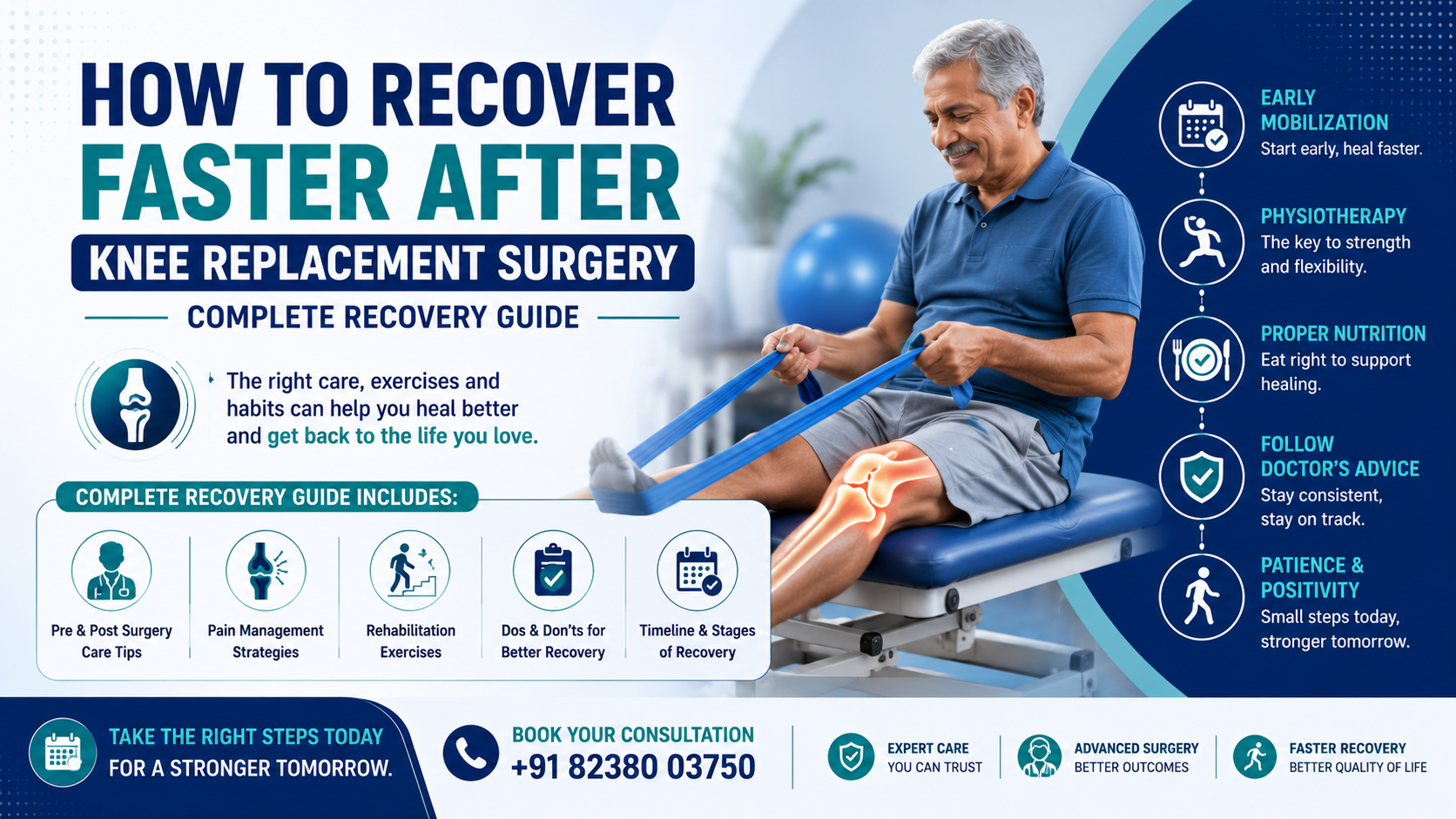
Undergoing knee replacement surgery is an important step toward living a pain-free and active life. However, surgery is only the beginning of your journey. The real success of the procedure depends on how well you follow your recovery plan.
Many patients believe that once the surgery is over, everything automatically returns to normal. In reality, proper rehabilitation, regular exercises, and healthy lifestyle choices play a crucial role in achieving the best results.
Whether you have undergone traditional or robotic knee replacement surgery, understanding the recovery process helps you regain confidence and mobility more quickly.
What Happens Immediately After Surgery?
After knee replacement surgery, you will be monitored closely by your medical team. Pain management, early movement, and preventing complications become the primary focus during the first few days.
Most patients are encouraged to:
- Sit up within a few hours
- Stand with assistance
- Start walking using a walker
- Begin gentle knee exercises
- Practice breathing exercises
Early movement helps improve blood circulation and reduces the risk of complications such as blood clots.
The First Week of Recovery
The first week is often the most challenging, but it is also the most important.
During this period, you may experience:
- Mild swelling
- Pain around the surgical site
- Temporary stiffness
- Difficulty bending the knee
- Fatigue
These symptoms are normal and gradually improve with proper care.
Physiotherapists guide patients through safe exercises that help restore knee movement while protecting the new joint.
Why Physiotherapy is Essential
Physiotherapy is one of the most important parts of knee replacement recovery.
Regular exercises help:
- Improve flexibility
- Strengthen muscles
- Increase knee movement
- Reduce stiffness
- Improve walking ability
- Restore balance
Skipping physiotherapy sessions can slow recovery and affect the long-term success of the surgery.
Exercises That Help Recovery
Your orthopedic surgeon or physiotherapist may recommend exercises such as:
- Ankle pumps
- Straight leg raises
- Heel slides
- Knee bends
- Quadriceps strengthening
- Walking exercises
These exercises should only be performed under professional guidance, especially during the early recovery phase.
Managing Pain and Swelling
Pain and swelling are common after surgery but can usually be managed effectively.
Helpful tips include:
- Take medications as prescribed
- Apply ice packs if recommended
- Keep the leg elevated while resting
- Avoid prolonged standing
- Wear compression stockings if advised
- Stay hydrated
Never ignore severe pain, redness, fever, or unusual swelling. Contact your orthopedic surgeon immediately if these symptoms develop.
Nutrition for Faster Recovery
A healthy diet helps the body heal more efficiently.
Include foods rich in:
- Protein
- Calcium
- Vitamin D
- Vitamin C
- Iron
- Zinc
- Fresh fruits
- Green vegetables
- Whole grains
Proper nutrition supports wound healing, muscle recovery, and stronger bones.
Drinking enough water also helps reduce fatigue and supports overall healing.
Activities to Avoid During Recovery
While staying active is important, certain activities should be avoided during the recovery period.
Avoid:
- Running
- Jumping
- Heavy lifting
- Squatting
- Sitting cross-legged for prolonged periods
- Twisting movements
- High-impact sports
Following your surgeon’s instructions helps protect the new joint and ensures a smoother recovery.
Recovery Timeline
Every patient heals differently, but a general recovery timeline includes:
First Week
- Walking with support
- Pain gradually reduces
- Daily physiotherapy begins
2–6 Weeks
- Improved mobility
- Reduced swelling
- Increased independence
6–12 Weeks
- Better strength
- Easier walking
- Return to many daily activities
3–6 Months
- Continued improvement
- Better flexibility
- Increased confidence while walking
Up to One Year
- Maximum recovery for most patients
- Improved comfort and joint function
Consistency is the key to successful rehabilitation.
Tips for Faster Recovery
Simple habits can make a significant difference in your recovery.
- Follow your physiotherapy schedule
- Stay physically active within safe limits
- Maintain a healthy weight
- Eat a balanced diet
- Take medications regularly
- Attend follow-up appointments
- Get adequate sleep
- Stay positive and patient
Recovery is a gradual process, and small daily improvements lead to long-term success.
When Should You Contact Your Orthopedic Surgeon?
Seek medical attention immediately if you notice:
- Persistent fever
- Excessive swelling
- Severe pain
- Difficulty breathing
- Continuous wound discharge
- Sudden inability to walk
- Redness spreading around the incision
Early medical intervention can prevent complications and improve outcomes.
Why Choosing the Right Surgeon Matters
Successful recovery begins with successful surgery.
An experienced orthopedic and joint replacement surgeon not only performs the procedure but also guides patients through every stage of rehabilitation.
Dr. Jil Patel, MS (Orthopedics), Gold Medalist, Consultant Orthopedic & Joint Replacement Surgeon, believes that personalized rehabilitation, patient education, and continuous follow-up are essential for achieving the best possible results after knee replacement surgery.
Frequently Asked Questions
How long does recovery after knee replacement surgery take?
Most patients recover significantly within three months, while complete recovery may take six months to one year depending on individual health and rehabilitation.
When can I walk after surgery?
Most patients begin walking with assistance within a day after surgery under medical supervision.
Can I climb stairs after knee replacement?
Yes. With physiotherapy and proper rehabilitation, most patients gradually regain the ability to climb stairs comfortably.
Is physiotherapy really necessary?
Yes. Physiotherapy is one of the most important factors in achieving a successful recovery after knee replacement surgery.
Does robotic knee replacement improve recovery?
For suitable patients, robotic-assisted surgery may contribute to improved implant positioning and a smoother recovery, but rehabilitation remains equally important.
Conclusion
Recovering after knee replacement surgery requires dedication, patience, and expert guidance. While surgery relieves the underlying joint damage, your daily commitment to physiotherapy, healthy eating, regular exercise, and follow-up care determines how quickly you regain mobility.
If you are considering knee replacement surgery or want expert guidance for your recovery journey, consulting an experienced orthopedic specialist can make all the difference. With advanced treatment options and personalized rehabilitation plans, patients can return to an active, independent, and pain-free lifestyle.
Book Your Consultation
Planning for knee replacement surgery or recovering after the procedure? Consult Dr. Jil Patel for expert orthopedic care, personalized rehabilitation guidance, and advanced joint replacement solutions in Ahmedabad to help you recover safely and confidently.