
Knee pain while walking can result from arthritis, ligament injuries, cartilage damage, tendon problems, or overuse. Mild pain may improve with rest and physiotherapy, but persistent pain, swelling, stiffness, or difficulty walking should be evaluated by an experienced orthopedic surgeon to prevent further joint damage.
Knee Pain Should Never Be Ignored
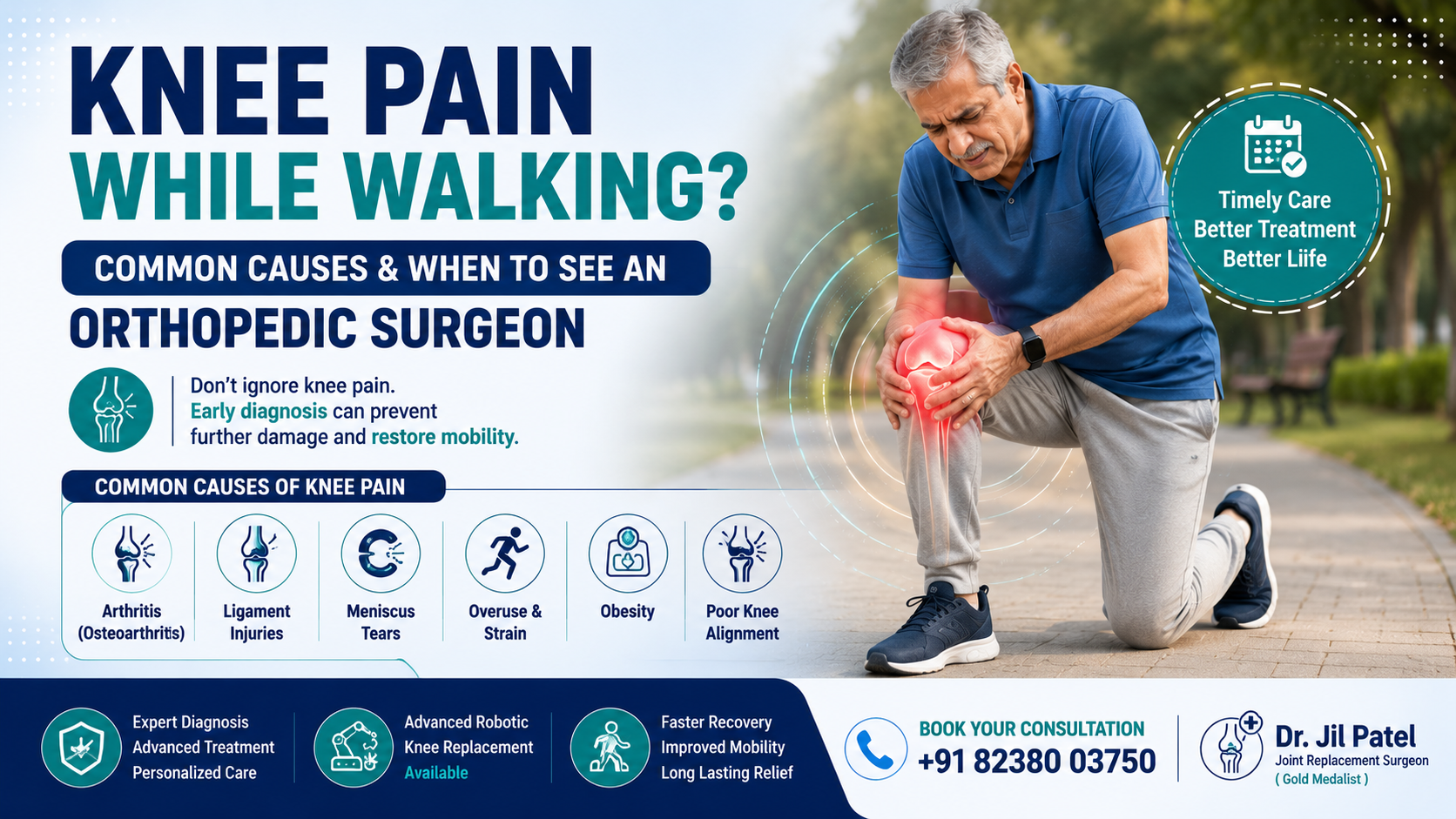
Walking is one of the most basic activities we perform every day. Whether it’s climbing stairs, going to work, shopping, or enjoying a walk with your family, healthy knees make movement effortless. However, when every step becomes painful, it can significantly affect your quality of life.
Many people assume knee pain is simply a sign of growing older and continue living with discomfort for months or even years. Unfortunately, ignoring knee pain can worsen the underlying problem and make treatment more complicated later.
If you are looking for Knee Pain Treatment in Ahmedabad, understanding the cause of your pain is the first step toward effective treatment and long-term relief.
Why Does Knee Pain Occur While Walking?
The knee is one of the largest and most complex joints in the human body. It supports your body weight and absorbs impact every time you walk, run, bend, or climb stairs.
Pain while walking usually develops when one or more parts of the knee become damaged or inflamed. This may involve the cartilage, ligaments, tendons, bones, or surrounding muscles.
The severity of pain depends on the underlying condition, your activity level, and how long the problem has existed.
Common Causes of Knee Pain While Walking
Osteoarthritis
Osteoarthritis is the most common cause of chronic knee pain, especially in adults over 50 years of age.
Over time, the protective cartilage inside the knee gradually wears away. As the cartilage becomes thinner, the bones begin rubbing against each other, leading to pain, stiffness, swelling, and reduced mobility.
Patients often experience pain after walking for long periods or climbing stairs.
Rheumatoid Arthritis
Unlike osteoarthritis, rheumatoid arthritis is an autoimmune disease where the body’s immune system attacks healthy joints.
Symptoms often include:
- Morning stiffness
- Swollen joints
- Pain in both knees
- Fatigue
- Difficulty walking
Early diagnosis is essential to prevent permanent joint damage.
Meniscus Tear
The meniscus acts as a shock absorber inside the knee joint.
A sudden twist while playing sports, exercising, or even getting up awkwardly can tear the meniscus.
Common symptoms include:
- Sharp pain
- Knee locking
- Swelling
- Difficulty bending the knee
- Pain while walking
Ligament Injuries
Ligaments provide stability to the knee.
Sports injuries, falls, or accidents may damage important ligaments such as the ACL, PCL, MCL, or LCL.
Patients often describe:
- Instability
- Sudden swelling
- Pain during movement
- Difficulty bearing weight
Patellar Tendinitis
Patellar tendinitis occurs when the tendon connecting the kneecap to the shinbone becomes inflamed.
It is common among:
- Runners
- Athletes
- People who frequently jump
- Individuals with repetitive knee strain
Pain usually increases during walking, running, or climbing stairs.
Bursitis
Small fluid-filled sacs called bursae help reduce friction around the knee.
When these sacs become inflamed, patients experience:
- Swelling
- Warmth
- Pain while walking
- Tenderness around the knee
Symptoms That Should Not Be Ignored
Consult an orthopedic surgeon if you experience:
- Persistent knee pain
- Swelling lasting several days
- Knee stiffness
- Difficulty walking
- Clicking or locking of the knee
- Knee instability
- Reduced range of motion
- Pain that interrupts sleep
- Inability to climb stairs comfortably
These symptoms may indicate significant joint damage requiring medical evaluation.
How is Knee Pain Diagnosed?
Accurate diagnosis is the foundation of successful treatment.
An orthopedic specialist will usually perform:
- Detailed medical history
- Physical examination
- Walking assessment
- Range of motion testing
- X-rays
- MRI scan (if required)
- Blood tests in selected cases
A thorough evaluation helps identify the exact cause and determine the most appropriate treatment plan.
Treatment Options for Knee Pain
Treatment depends entirely on the cause of the pain.
Non-Surgical Treatments
Many patients improve without surgery through:
- Physiotherapy
- Weight management
- Pain-relieving medications
- Anti-inflammatory medicines
- Activity modification
- Knee strengthening exercises
- Bracing
- Joint injections when appropriate
These treatments are often effective for mild to moderate joint problems.
When is Surgery Required?
Surgery may be recommended if:
- Pain becomes severe
- Arthritis has advanced
- Walking becomes difficult
- Conservative treatment fails
- Daily activities are significantly affected
Modern orthopedic surgery includes both traditional and robotic knee replacement for suitable candidates.
Tips to Protect Your Knees
Healthy lifestyle habits can reduce stress on your knee joints.
Simple preventive measures include:
- Maintain a healthy body weight
- Exercise regularly
- Strengthen thigh and leg muscles
- Wear supportive footwear
- Avoid prolonged sitting
- Stretch before physical activity
- Avoid sudden twisting movements
- Seek treatment early instead of ignoring symptoms
Taking care of your knees today can reduce the risk of future complications.
Why Early Consultation Matters
Many patients delay treatment until knee pain becomes unbearable.
Early consultation helps identify the problem before significant joint damage develops. Timely treatment may reduce pain, improve mobility, and even help avoid surgery in certain cases.
If surgery becomes necessary, modern orthopedic techniques, including robotic-assisted knee replacement, provide advanced treatment options for eligible patients.
Frequently Asked Questions
Is knee pain while walking always due to arthritis?
No. Knee pain can also result from ligament injuries, tendon problems, cartilage tears, bursitis, infections, or overuse.
When should I see an orthopedic surgeon?
If pain lasts for more than a few weeks, affects walking, or does not improve with rest and medication, consult an orthopedic specialist.
Can physiotherapy cure knee pain?
Physiotherapy can significantly improve many knee conditions, especially in the early stages. However, advanced arthritis may require surgical treatment.
Is robotic knee replacement available in Ahmedabad?
Yes. Robotic knee replacement is available in Ahmedabad for patients who are suitable candidates after evaluation by an experienced orthopedic surgeon.
Can knee pain be prevented?
Maintaining a healthy weight, exercising regularly, strengthening muscles, and treating injuries early can help reduce the risk of chronic knee problems.
Conclusion
Knee pain while walking is not something you should ignore. Although it may begin as mild discomfort, it can gradually progress into a condition that limits your mobility and affects your quality of life.
Whether the cause is arthritis, a ligament injury, a meniscus tear, or another orthopedic condition, early diagnosis plays a vital role in successful treatment. If your symptoms persist despite medication, physiotherapy, or lifestyle changes, seeking expert care is the best decision.
For those looking for Knee Pain Treatment in Ahmedabad, a comprehensive evaluation by an experienced orthopedic and joint replacement surgeon can help identify the root cause and recommend the most suitable treatment to restore pain-free movement and improve long-term joint health.
Book Your Consultation
Don’t let knee pain limit your daily life. Schedule a consultation with Dr. Jil Patel to receive a detailed assessment and personalized treatment plan for knee pain, arthritis, sports injuries, and advanced joint replacement solutions in Ahmedabad.