
Persistent knee pain, stiffness, swelling, and difficulty performing daily activities may indicate that your knee joint is severely damaged. If medications, physiotherapy, and lifestyle changes no longer provide relief, consulting an orthopedic specialist for knee replacement surgery in Ahmedabad can help restore mobility and improve your quality of life.
Don’t Ignore Persistent Knee Pain
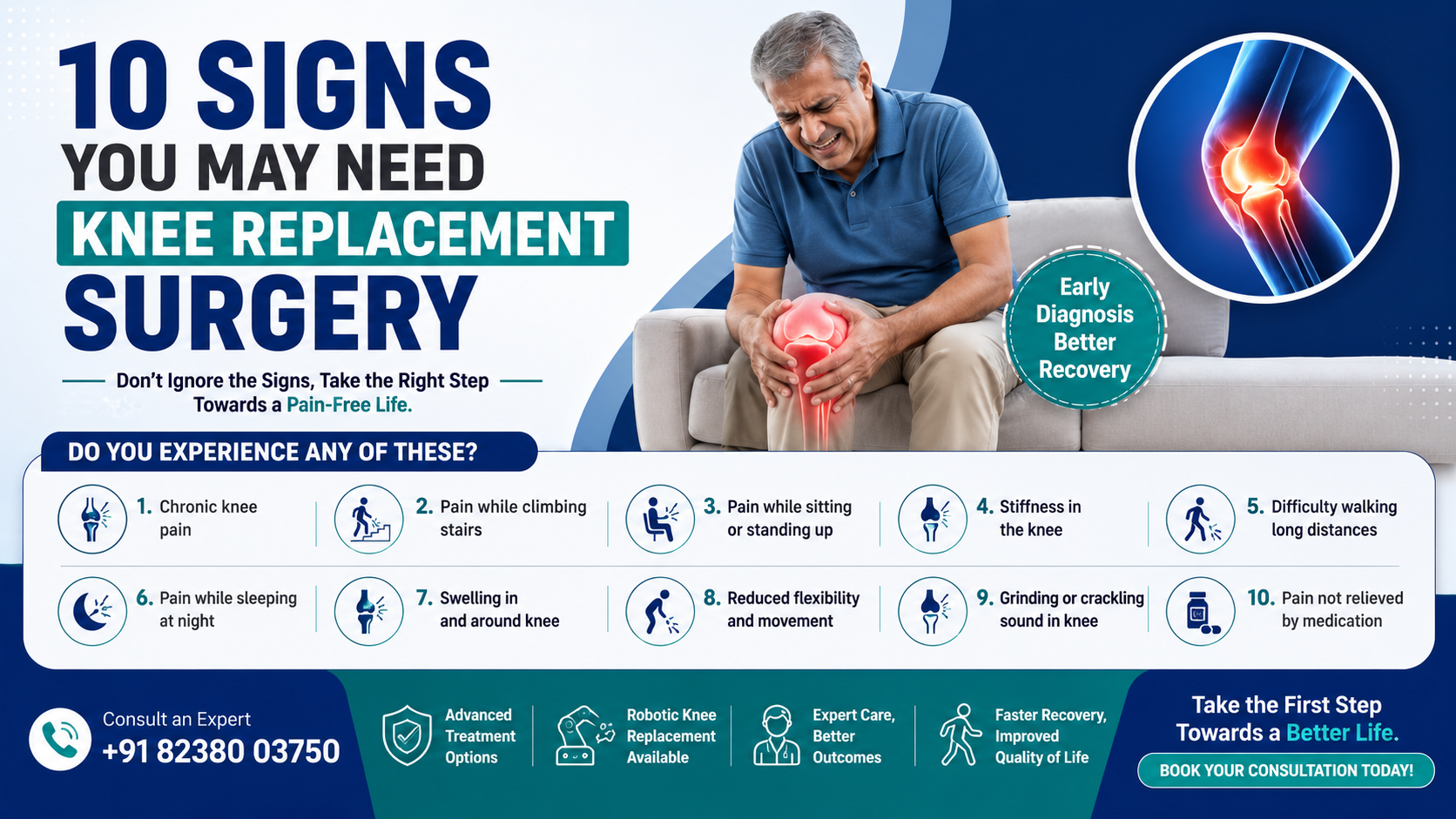
Knee pain is one of the leading causes of disability among adults. While occasional discomfort after physical activity is common, persistent knee pain that interferes with daily life should never be ignored. Many people continue living with severe pain, believing it is simply a part of aging. However, untreated knee damage can gradually worsen and significantly affect mobility, independence, and overall health.
Modern orthopedic care offers advanced treatment options, including robotic knee replacement and traditional knee replacement surgery. Knowing when surgery becomes necessary is the first step toward regaining an active lifestyle.
If you are searching for Knee Replacement Surgery in Ahmedabad, understanding these warning signs can help you seek treatment at the right time.
What is Knee Replacement Surgery?
Knee replacement surgery is a procedure in which the damaged cartilage and bone of the knee joint are replaced with artificial implants. The primary goal is to relieve chronic pain, restore joint function, and improve mobility.
Before recommending surgery, orthopedic specialists usually advise non-surgical treatments such as medications, physiotherapy, weight management, lifestyle modifications, and injections. When these treatments fail to provide lasting relief, knee replacement surgery may be the most effective option.
1. Persistent Knee Pain That Doesn’t Go Away
One of the most common signs is continuous knee pain lasting for several months. The pain may begin after walking or climbing stairs but gradually starts affecting everyday activities.
If pain persists despite medication, rest, or physiotherapy, it may indicate advanced joint damage.
2. Difficulty Walking Even Short Distances
Walking should not be painful.
If you struggle to walk even a few hundred meters without stopping because of knee pain, your joint may have significant cartilage damage.
Patients often notice they avoid outings, shopping, or social gatherings simply because walking has become difficult.
3. Severe Knee Stiffness
Does your knee feel stiff every morning?
Joint stiffness lasting for a long time can make it difficult to bend or straighten the knee. It often becomes worse after sitting for extended periods.
Persistent stiffness is commonly associated with advanced osteoarthritis.
4. Knee Pain While Climbing Stairs
Climbing stairs puts additional pressure on the knee joint.
If you experience sharp pain while going upstairs or downstairs, it could be a sign of worn-out cartilage or joint degeneration.
Ignoring this symptom may lead to further damage.
5. Swelling That Keeps Returning
Occasional swelling after heavy activity is normal.
However, repeated swelling without a clear reason may indicate inflammation caused by arthritis or advanced joint disease.
If swelling continues despite treatment, an orthopedic evaluation is recommended.
6. Bowed Legs or Knee Deformity
As arthritis progresses, the alignment of the knee may gradually change.
Some patients notice their legs becoming bow-shaped or knock-kneed.
Joint deformity is a strong indicator that the knee has suffered significant damage and may require surgical correction.
7. Pain Even While Resting
Healthy knees should not hurt while sitting or sleeping.
If knee pain wakes you up at night or continues even when you are resting, it may indicate severe arthritis.
Night pain is often one of the signs that conservative treatments are no longer enough.
8. Medicines No Longer Help
Painkillers and anti-inflammatory medicines can temporarily reduce symptoms.
However, if you need medication every day just to perform routine activities, it is important to consult an orthopedic specialist.
Long-term dependence on painkillers is not a permanent solution.
9. Daily Activities Become Difficult
Simple tasks like:
- Getting out of bed
- Sitting on a chair
- Driving
- Standing for long periods
- Squatting
- Walking inside your home
should not cause severe pain.
If knee pain limits your independence, knee replacement surgery may significantly improve your quality of life.
10. Physiotherapy Isn’t Providing Relief
Physiotherapy is one of the best non-surgical treatments for knee pain.
However, if you have completed multiple sessions without noticeable improvement, your orthopedic surgeon may recommend further investigations.
In many cases, advanced arthritis cannot be reversed through exercise alone.
Who is Most at Risk?
You may have a higher risk of needing knee replacement surgery if you:
- Are over 55 years of age
- Have osteoarthritis
- Are overweight
- Have a previous knee injury
- Have rheumatoid arthritis
- Participate in high-impact activities
- Have a family history of joint problems
Early diagnosis can help slow disease progression and improve treatment outcomes.
Can Surgery Be Avoided?
Not every patient with knee pain requires surgery.
Many individuals benefit from:
- Weight management
- Physiotherapy
- Activity modification
- Knee strengthening exercises
- Anti-inflammatory medication
- Joint injections
Surgery is generally recommended only when these treatments fail to relieve pain and restore function.
Benefits of Knee Replacement Surgery
When recommended for the right patient, knee replacement surgery can offer:
- Significant pain relief
- Better mobility
- Improved walking ability
- Easier stair climbing
- Better sleep
- Enhanced quality of life
- Increased independence
- Long-lasting results
Many patients return to their daily routines with greater comfort and confidence after successful recovery.
Why Early Consultation Matters
Many people wait until the pain becomes unbearable before consulting a specialist.
Early evaluation allows your orthopedic surgeon to assess the condition of your knee, explain all available treatment options, and determine whether non-surgical care or knee replacement is the most appropriate solution.
Delaying treatment for too long may increase joint deformity and reduce mobility.
Frequently Asked Questions
How do I know if I need knee replacement surgery?
If knee pain limits your daily activities and conservative treatments no longer provide relief, consult an orthopedic specialist for evaluation.
What is the best age for knee replacement surgery?
There is no fixed age. The decision depends on pain severity, joint damage, overall health, and lifestyle.
Is robotic knee replacement available in Ahmedabad?
Yes. Robotic knee replacement is available in Ahmedabad and offers advanced precision for suitable patients.
How long does recovery take?
Most patients begin walking shortly after surgery with guidance. Complete recovery varies depending on individual health and rehabilitation.
Can I delay knee replacement surgery?
In some cases, yes. However, delaying surgery despite severe arthritis may lead to worsening pain, deformity, and reduced quality of life.
Conclusion
Persistent knee pain should never be considered a normal part of aging. If you experience severe pain, stiffness, swelling, difficulty walking, or find that medications and physiotherapy are no longer effective, it may be time to consider Knee Replacement Surgery in Ahmedabad.
Consulting an experienced orthopedic and joint replacement surgeon can help you understand your condition and choose the treatment that best suits your needs. Early diagnosis and timely intervention can relieve pain, restore mobility, and help you return to an active and independent life.
Book Your Consultation
If persistent knee pain is affecting your daily life, schedule a consultation with Dr. Jil Patel to explore personalized treatment options, including advanced robotic knee replacement and comprehensive orthopedic care in Ahmedabad.